Friday, July 24, 2026

Friday, July 24, 2026


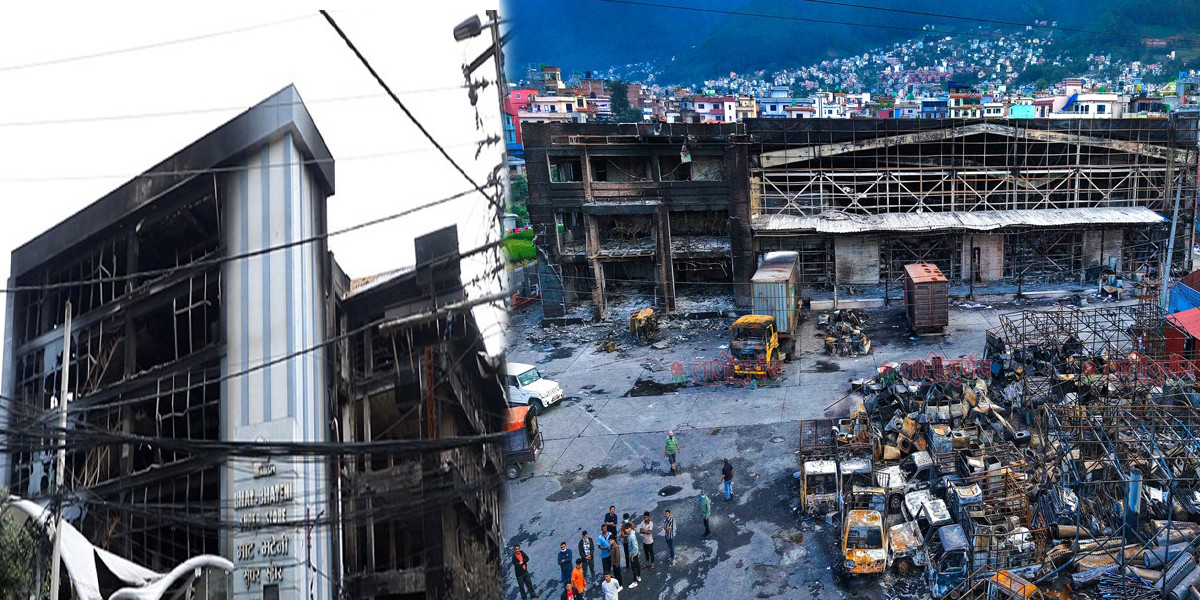
Kathmandu, The recent Gen-Z movement has caused massive destruction across Nepal, resulting in an estimated loss of around Rs. 80 billion to the private sector. Not only government properties, but also multinational companies, hotel chains, banks, and even the private homes of businesspeople were vandalized, looted, and set on fire, according to business leaders. They say the incidents have deeply shaken the morale of Nepal’s private sector.
Among the hardest-hit sectors is tourism. Traditionally, September is considered a peak tourist season in Nepal, but this year, the sector has taken a serious blow due to the unrest. Many tourists have canceled their bookings out of fear, and the number of arrivals has dropped significantly, according to tourism entrepreneurs.
In response to increasing pressure from the business community, the government recently announced a preliminary relief package during a cabinet meeting held last Sunday. Based on recommendations from the Ministry of Finance, Nepal Rastra Bank, and the Insurance Board, the package includes customs duty waivers, advance insurance claim payouts, deferred loan payments, and the implementation of a “Payroll Protection Plan” to retain workers.
.gif)
Specifically, the government has promised up to 50% customs duty exemption on imported goods necessary for the reconstruction of damaged infrastructure. The Insurance Board will arrange for advance claim payments based on damage assessments. Similarly, Nepal Rastra Bank will allow loan deferments for affected businesses. Those unable to repay loans may be compensated through a reconstruction fund, while others will be eligible for concessional loans.
However, private sector leaders have expressed concern that the relief package, while welcome, is not enough to fully restore confidence. Birendra Raj Pandey, President of the Confederation of Nepalese Industries (CNI), called the package a "bandage on a deep wound," saying it falls short of addressing the scale of the crisis. He emphasized the need for government action on economic restoration, law enforcement, and a long-term recovery strategy.

Former President of the Federation of Nepalese Chambers of Commerce and Industry (FNCCI), Bhawani Rana, praised the government's effort, noting that having a finance minister who understands the private sector is a positive sign. However, she emphasized the need for a broader strategy to boost both domestic and foreign investment, in addition to short-term relief.
Deepak Malhotra, Senior Vice President of the Nepal Chamber of Commerce, said the current crisis is unlike previous disasters such as the 2015 earthquake or the COVID-19 pandemic and requires urgent refinancing support from Nepal Rastra Bank. He urged the government to prioritize affordable loans for businesses struggling to recover.
The automobile sector has also been severely affected. Karan Chaudhary, President of the NADA Automobiles Association of Nepal, welcomed the relief package but said changes in loan policies are necessary to boost vehicle sales, especially during the festival season. He pointed out that the auto industry contributes significantly to government revenue, and delays in recovery could further reduce tax collections.
In the tourism sector, the president of the Trekking Agencies’ Association of Nepal (TAAN), Sagar Pandey, stressed the need for a dedicated “recovery plan.” He suggested waiving visa fees for foreign tourists for three months to revitalize the industry. “Even structures that weren't physically damaged are suffering due to the lack of tourist flow,” he said.
FNCCI Vice President Hemraj Dhakal echoed the concerns, warning that unless the government guarantees security, businesses will continue to live in fear. "We can rebuild and move forward, but what's the guarantee that this won’t happen again?" he asked.
Leaders from the private sector also emphasized the need to address indirect victims of the crisis—those in the supply chain, logistics, transport, and small-scale businesses affected by disruptions. They are calling for a stronger legal system, enforcement of accountability, and a permanent mechanism for government-business dialogue.
In conclusion, while the government's relief package has been acknowledged as a positive first step, business leaders are united in their call for deeper, long-term measures. They urge the government to introduce an economic ordinance, ensure law enforcement, restore investor confidence, and take meaningful action to rebuild Nepal’s economic backbone.
© 2026 All right reserved to laligurash.com
By